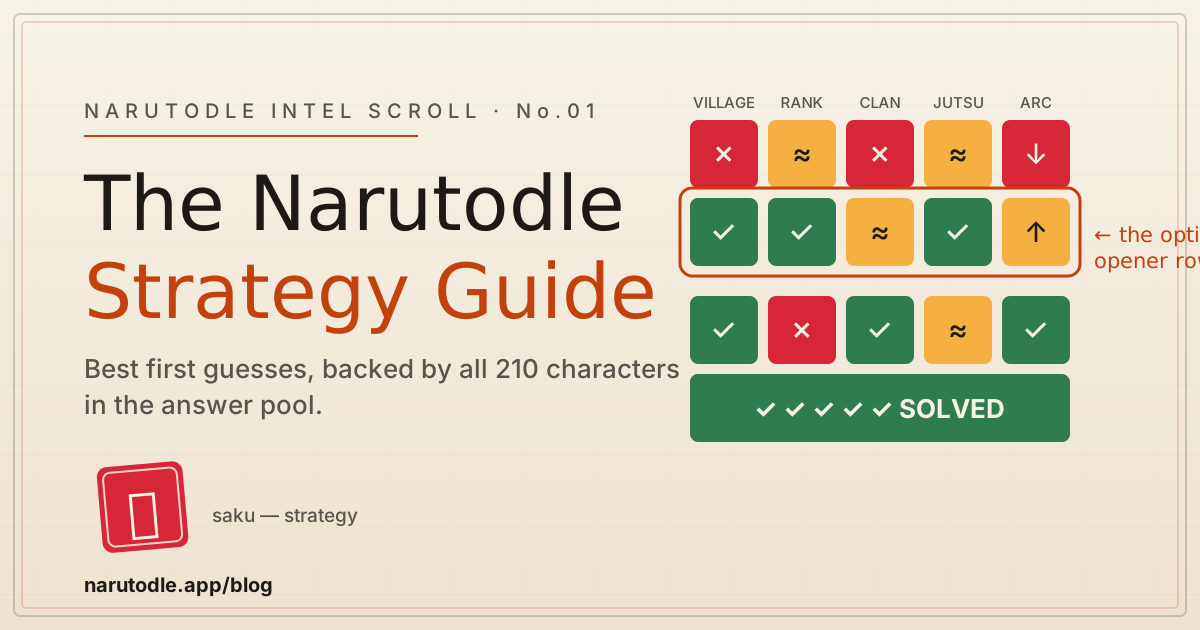
41% of all Narutodle answers are Konoha shinobi. You might conclude that guessing a Konoha character first is the obvious play, and most days you would be wrong to stop there. The village cell is one of nine signals a single guess can produce, and the players who solve in four rows instead of ten are the ones reading all nine at once.
This guide is built on the actual answer pool. We pulled the full 210-character dataset that powers the daily puzzle and counted every attribute the grid compares. No other Narutodle strategy article can publish these numbers, because no one else has the pool. Here is what you will get out of the next ten minutes: the single best opener profile, the three columns that carry most of the information, the one column that carries almost none, a pivot rule for yellow cells, and a full worked solve.
How the Narutodle answer pool actually looks
Every Classic puzzle draws from the same 210 characters, frozen at the end of Naruto: Shippūden. Before any strategy makes sense, you need the shape of that pool. We counted every value in every compared column. The headline numbers:
| Column | Most common value | Share of pool | Read |
|---|---|---|---|
| Village | Konoha (87 of 210) | 41.4% | The single biggest cluster anywhere in the grid. |
| Ninja rank | Jōnin (80 of 210) | 38.1% | Rank arrows say more below Jōnin than above it. |
| Gender | Male (158 of 210) | 75.2% | A female guess is the sharper probe. |
| Kekkei genkai | None (159 of 210) | 75.7% | Any non-none match erases three quarters of the pool. |
| Vital status | Alive (110 of 210) | 52.4% | Near coin-flip; the 5-miss hint is genuinely useful. |
| Jutsu types | Ninjutsu (202 of 210) | 96.2% | Almost dead as a signal; taijutsu (169) is not far behind. |
| Debut arc | Shinobi War (45 of 210) | 21.4% | One in five answers debuts in the final war. |
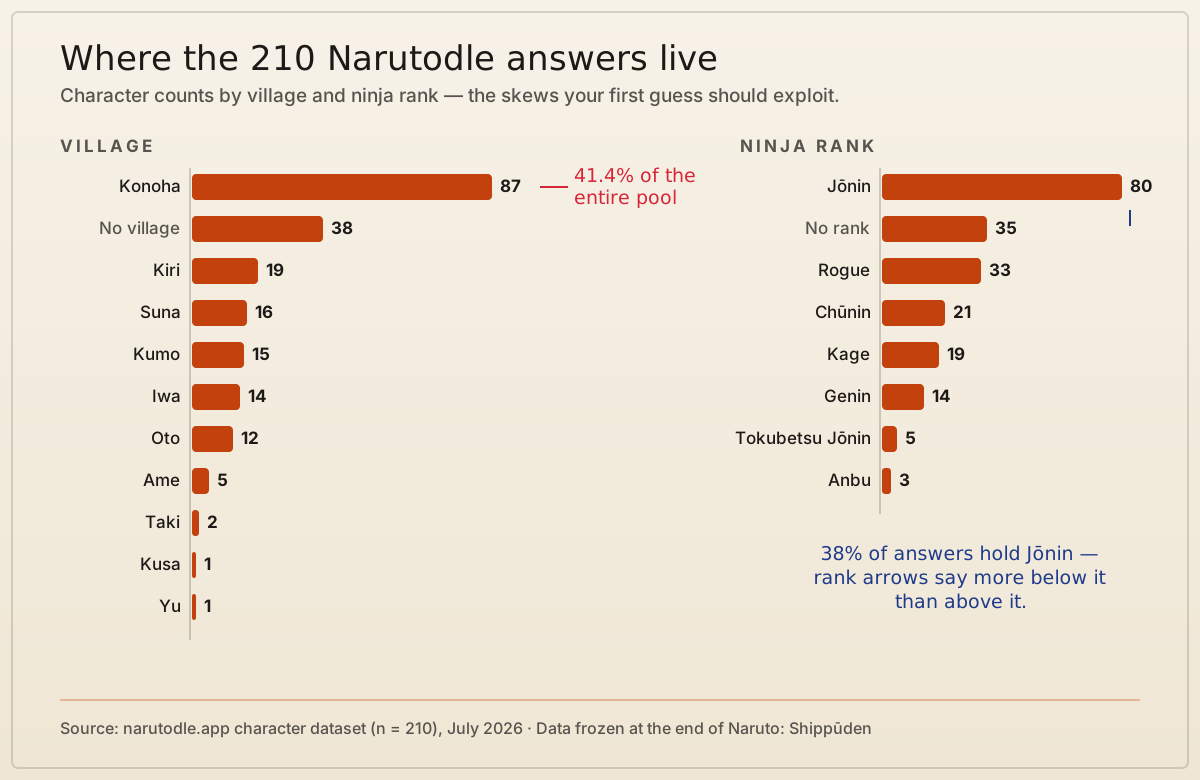
Three of these numbers should change how you play. First, the Konoha share: at 87 of 210, a village hit or miss on Konoha is the fastest big cut available on turn one. Second, the kekkei genkai skew: 159 characters have none, which means the column is silent most days but deafening when it speaks. Third, the jutsu-types trap: 202 of 210 characters know ninjutsu, so a green ninjutsu overlap tells you close to nothing.
Of the 210 characters in the Narutodle pool, 159 (75.7%) have no kekkei genkai. A single non-none kekkei genkai cell eliminates three quarters of all possible answers in one move.
Technique #1 — Open with a maximum-spread character
Your first guess is not an attempt to win. It is a survey. The goal is to put a value into every column so that each cell comes back with a verdict, and the best openers are characters whose values partition the pool into usefully sized groups. An opener with an empty clan, no kekkei genkai list, and one jutsu type wastes cells; an opener with a named clan, a full jutsu spread, and a mid-order debut arc turns all nine columns into instruments.
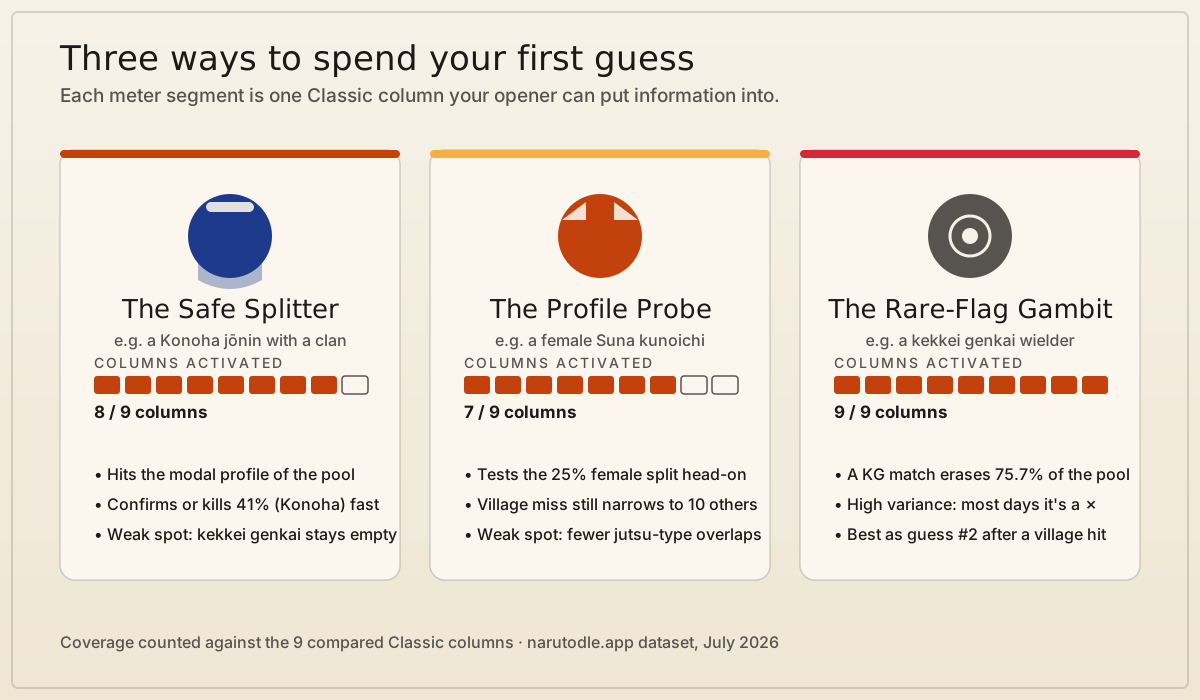
The safe splitter is a Konoha jōnin with a named clan, the modal profile of the pool. Kakashi Hatake is the canonical example: male, Konoha, Kage-rank in the frozen data, Hatake clan, multiple jutsu types, multiple natures, and a debut in the very first arc. Whatever comes back, half the grid is now readable. The profile probe flips the low-frequency attributes instead: a female character from a non-Konoha village, such as Temari, tests the 24.8% female split and a smaller village in the same row. The rare-flag gambit spends the first guess on a kekkei genkai holder. Most days the cell comes back red and you have confirmed the boring, common case; on the days it comes back yellow or green, the puzzle is nearly over.
Which archetype is right? If you play for streak safety, the safe splitter wins on expected value. If you already burned your daily on Classic and are practicing in Unlimited mode, the gambit teaches you the rare corners of the roster faster.
Technique #2 — Read arrows before colors
Two columns are ordered rather than categorical: ninja rank and debut arc. When those cells miss, they do not just say wrong, they say wrong in which direction. Players trained on color-only games skim past the arrows, and the arrows are the strongest signal in the grid.
The debut arcs are numbered 1 through 11 in story order, from the Land of Waves prologue to the Fourth Shinobi World War. Guess a character from arc 5 (Kazekage Rescue) and receive an up arrow, and you have just learned the answer debuts in arcs 1 to 4. That region holds 86 of the 210 characters, so one arrow eliminated 124 candidates without a single green cell. Rank works the same way along the academy-to-Kage ladder, with a twist the distribution table already revealed: because 80 characters sit at Jōnin, a down arrow from Jōnin cuts far deeper than an up arrow from Chūnin.
Technique #3 — Treat yellow as a roster, not a maybe
Four columns compare lists instead of single values: jutsu types, nature releases, kekkei genkai, and special attributes. For these, the grid speaks set logic. Green means your guess's list and the answer's list are identical. Red means they share nothing. Yellow means overlap: at least one element in common, at least one element different.
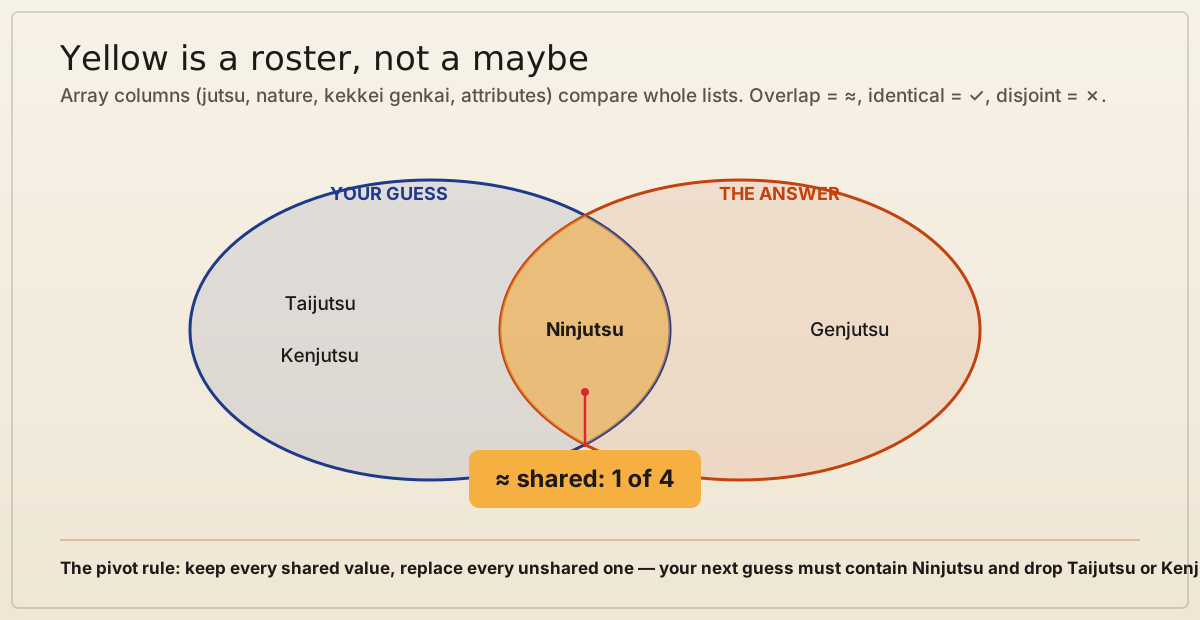
That definition dictates the pivot rule: keep every value the yellow cell could be crediting, replace the rest. If your guess listed wind and lightning natures and came back yellow, your next guess should keep exactly one of those and swap the other for something new. Two consecutive yellows with one shared element between the guesses is a near-confirmation of that element. Players who re-guess the same full list are spending turns to learn nothing.
Technique #4 — Use the kill-columns: kekkei genkai and vital status
Every pool has columns that are usually quiet and columns that are usually loud. Kekkei genkai is the quiet assassin. Because 75.7% of characters have none, the typical day produces a string of red or empty comparisons and players learn to ignore the column. Do not. The 49 dōjutsu holders and 27 nature-fusion users cluster into small, highly identifiable groups: see a yellow that could only come from a Sharingan line and you are choosing among a handful of Uchiha, not two hundred ninja. Our complete kekkei genkai list maps every holder if you want the exact rosters.
Vital status is the opposite: loud every single day. The pool splits 110 alive against 100 deceased, an almost perfect coin flip, which by information theory makes it the best single yes-or-no question the game can answer. The catch is that the game holds it back: vital status is the reward for the 5-miss progressive hint, not a grid column. Which brings us to hint budgeting.
Technique #5 — Budget your progressive hints (5 / 8 / 12)
Classic unlocks three helps as you miss: vital status at 5 wrong guesses, a chakra-nature close-up at 8, and the village crest at 12. At 20 misses, or on surrender, the answer is revealed. Treat these thresholds as insurance premiums. The 5-miss hint is nearly a free half-bit of information (that coin-flip split again), so if you are at four misses with two live theories, missing once more on your weaker theory is often correct play: you spend a guess, you gain the vital-status split, and both theories get re-scored.
The 8 and 12 thresholds are different. If you genuinely need the village crest at 12 misses, the earlier rows went unread; at that point the goal is protecting the streak, not the score. Take the hint, close the puzzle, and replay the deduction afterwards in the archive to see where the chain broke.
A note on the psychology, because streaks distort judgment. After a long run, players start optimizing for not-losing instead of solving, which shows up as timid guesses that repeat confirmed information. The grid punishes timidity: a guess that can only confirm what you already know has an information value of zero, and zero-value guesses are how four-row puzzles become nine-row puzzles. The streak survives on decisive play, not careful play.
Technique #6 — Silhouette and Riddle transfer tactics
The habits above transfer across modes with one adjustment each. In Silhouette, the daily character is the same as Classic's, but the information channel is an image that brightens with every miss. The transfer skill is silhouette-first anatomy: hair mass, headgear, and shoulder line survive the darkening longest, so guess to test categories of outline rather than specific faces early on. In Riddle, the answer is independent and the clues are written, but the same discipline applies: every clause of the riddle is a column, and the three ofuda hints are your 5/8/12 ladder with a star cost instead of a miss cost.
Quote mode rewards a different muscle again. The line is verbatim and sourced, so the tell is rarely the content and usually the register: who talks about bonds, who talks about art, who lectures, who apologizes. Reading the same line across the Japanese, English, and Chinese tabs is not just a flourish; phrasing that survives translation is usually the character's signature phrasing, and that narrows speakers faster than any single language's wording. Hints in both Riddle and Quote cost stars, not guesses, so the budgeting logic inverts: guesses are free, reveals are the scarce resource.
Technique #7 — Play the calendar, not just the grid
There is one more information source most players never touch: time itself. The daily answer is drawn from a fixed, pre-shuffled sequence of all 210 characters, which has two consequences you can use. First, the same character cannot repeat until the whole cycle runs its course, so every archived answer is a hard elimination. If the answer you are chasing feels like an obvious pick, check the archive: obvious picks burn out of the rotation early and often. Second, yesterday's answer is shown right on the game page, which means every day you start with at least one guaranteed exclusion before your first guess.
Serious streak players take this further and keep a private tally of which headline characters have already appeared. You do not need a spreadsheet; a rough memory of the last two weeks is enough to stop you from wasting a guess on a character who was the answer last Tuesday. Combine the calendar with the pool statistics and the effective search space on a typical day is meaningfully smaller than 210 before you type a single name.
One warning about over-fitting: the sequence is deterministic but deliberately shuffled with difficulty interleaved, so streaks of "easy" days tell you nothing about tomorrow. Treat the calendar as an elimination tool, never a prediction tool. The distinction matters for your stats: elimination is free information, while prediction is a bet, and the grid already gives you enough certainty that betting is rarely worth it.
A worked solve, start to finish
Here is the full method compressed into one replay. Names are abstracted so the deduction stays spoiler-free; the grid states are real game logic.
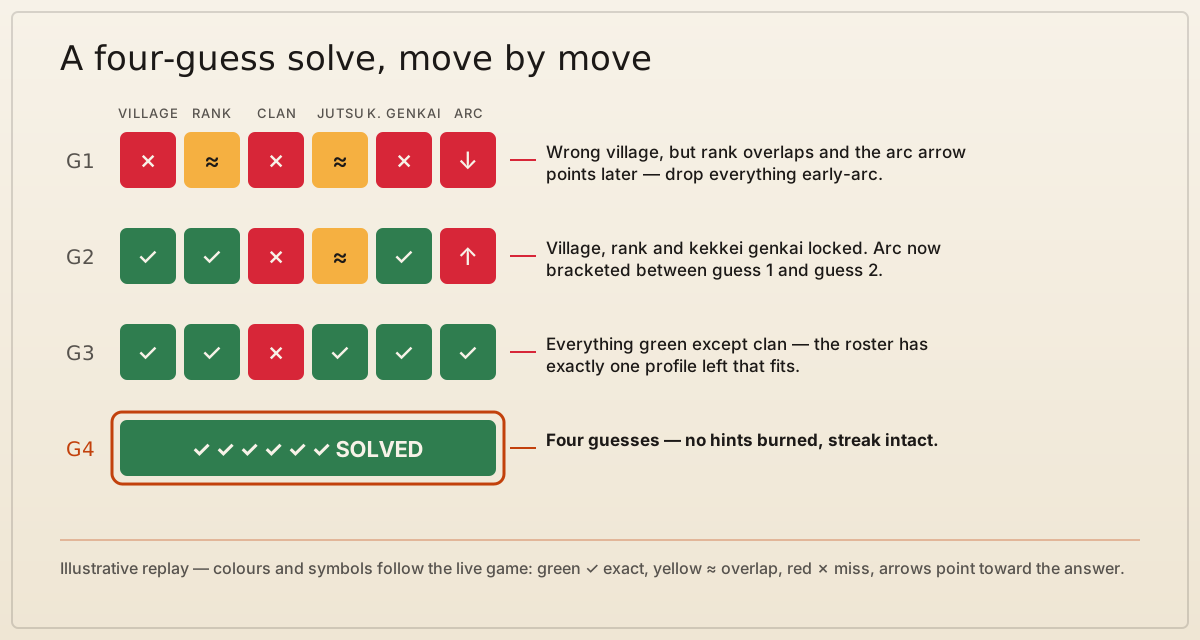
Guess 1 is a safe splitter. Village comes back red, rank yellow, the debut arc arrow points later. Immediately the Konoha 41% is gone, and everything debuting before our guess's arc is gone with it. Guess 2 keeps nothing from the first name; it changes village, keeps the rank family, and picks a later debut. Village and rank go green, kekkei genkai goes green on none, and the arc arrow flips to earlier: the answer is bracketed between the two guesses' arcs. Guess 3 stays inside that bracket with the confirmed village and rank; everything greens except the clan. At this point the surviving candidate list in a 210-character pool is almost always a single name, and Guess 4 is a formality. Four rows, zero hints, streak intact.
That is the whole system: survey with a spread opener, obey the arrows, pivot yellows by set logic, respect the quiet columns, and save hints for insurance. The pool statistics do the rest. Put it to work on today's puzzle, or grind the method risk-free in Unlimited.
FAQ
- What is the best first guess in Narutodle?
- A character who activates every column with common values: male, Konoha, Jōnin, a named clan, two or three jutsu types, at least one nature, no kekkei genkai, and an early debut arc. Kakashi Hatake ticks almost every box; in our 210-character pool analysis this profile confirms or eliminates more candidates on average than any other opener archetype.
- How many guesses does the average Narutodle take?
- There is no public global average, but against the 210-character pool a name-by-name strategy needs 12 or more tries, while column-driven play resolves most puzzles in 4 to 6. The progressive hints unlock at 5, 8, and 12 misses as a safety net, not a plan.
- Is the Narutodle answer the same for everyone?
- Yes. The daily character is fixed globally and rotates at 00:00 UTC, so every player in the world faces the same puzzle. Classic and Silhouette share the day's character; Riddle and Quote run independent answers so one mode never spoils another.
- Does Unlimited mode affect my streak?
- No. Unlimited rolls random characters for practice and stores nothing between sessions. Only the daily Classic result counts toward the streak saved in your browser's localStorage.
- Which Narutodle column gives the most information?
- Kekkei genkai and village. 75.7% of the pool has no kekkei genkai, so any non-empty match collapses the field to a quarter of its size, and village splits the pool into 11 uneven groups with Konoha alone holding 41%.